Theory in the Pathophysiology of Carcinogenesis
About Theory in the Pathophysiology of Carcinogenesis
Overview
Theory in the Pathophysiology of Carcinogenesis https://WebToolTip.com English | 2018 | ISBN-10: 1608056406 | 86 pages| PDF (True) | 3 MB This book explains the essential role of angiogenesis in the progression and spread of the neoplasm, including the mechanics of initial carcinogenesis in promoting malignant transformation. The book deals with specific categories or subtypes of tumors with some emphasis on astrocytomas and glioblastoma multiforme. The process of carcinogenesis has been re-inte
Frequently Asked Questions
How do I download Theory in the Pathophysiology of Carcinogenesis?
Click the magnet or torrent download button on this page to start downloading Theory in the Pathophysiology of Carcinogenesis. A BitTorrent client is required.
What is the file size of Theory in the Pathophysiology of Carcinogenesis?
The total size of Theory in the Pathophysiology of Carcinogenesis is 2.8 MB.
How many seeders are available for Theory in the Pathophysiology of Carcinogenesis?
Theory in the Pathophysiology of Carcinogenesis currently has 23276 seeders, which affects download speed.
What category is Theory in the Pathophysiology of Carcinogenesis in?
Theory in the Pathophysiology of Carcinogenesis is listed under Other on 1337x.
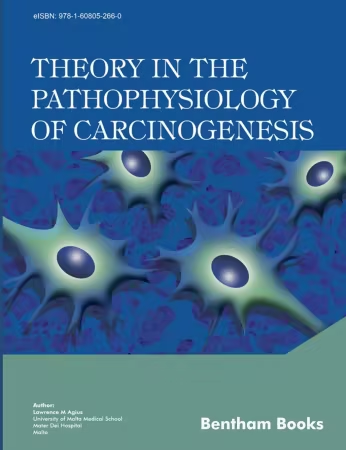
Theory in the Pathophysiology of Carcinogenesis
https://WebToolTip.com
English | 2018 | ISBN-10: 1608056406 | 86 pages| PDF (True) | 3 MB
This book explains the essential role of angiogenesis in the progression and spread of the neoplasm, including the mechanics of initial carcinogenesis in promoting malignant transformation. The book deals with specific categories or subtypes of tumors with some emphasis on astrocytomas and glioblastoma multiforme. The process of carcinogenesis has been re-interpreted in terms of deranged physiologic principles and hence reference is made to what upsets homeostatic mechanisms. Readers of this book will have an opportunity to appreciate the essential role of angiogenesis not only in progression and spread of the neoplasm but especially also in the mechanics of initial carcinogenesis in promoting malignant transformation. This book should be a useful reference for scholars and clinicians interested in learning about cancer pathophysiology.