The Incomparable Historian
About The Incomparable Historian
Overview
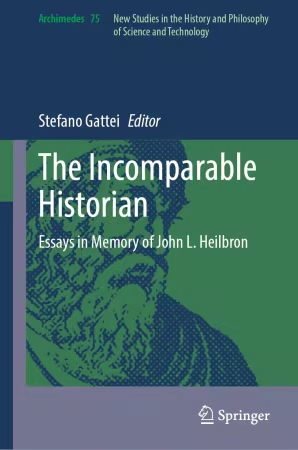
The Incomparable Historian https://WebToolTip.com English | July 14, 2026 | ISBN-10: 3032256771 | 489 pages| Epub PDF (True) | 75 MB This book brings together a collection of essays dedicated to the memory of John L. Heilbron (1934–2023), one of the foremost historians of science of his generation. Originally conceived as a Festschrift to mark his 90th birthday, it became a memorial volume following his passing. The contributors — former students, colleagues, and collaborators — reflect the brea
Frequently Asked Questions
How do I download The Incomparable Historian?
Click the magnet or torrent download button on this page to start downloading The Incomparable Historian. A BitTorrent client is required.
What is the file size of The Incomparable Historian?
The total size of The Incomparable Historian is 75.5 MB.
How many seeders are available for The Incomparable Historian?
The Incomparable Historian currently has 17723 seeders, which affects download speed.
What category is The Incomparable Historian in?
The Incomparable Historian is listed under Other on 1337x.
The Incomparable Historian
https://WebToolTip.com
English | July 14, 2026 | ISBN-10: 3032256771 | 489 pages| Epub PDF (True) | 75 MB
This book brings together a collection of essays dedicated to the memory of John L. Heilbron (1934–2023), one of the foremost historians of science of his generation. Originally conceived as a Festschrift to mark his 90th birthday, it became a memorial volume following his passing. The contributors — former students, colleagues, and collaborators — reflect the breadth of Heilbron’s scholarship, from the Scientific Revolution to modern physics, from Lamarck and Darwin to contemporary science writing. The essays exemplify his approach to the history of science: technically informed, contextually grounded, and attentive to language and method. Together, these studies trace the enduring influence of Heilbron’s work on the practice of historiography itself. They illustrate how his legacy continues to shape new research agendas, connecting detailed historical inquiry with broader questions about knowledge, culture, and scientific understanding. This volume is both a tribute and a continuation of his intellectual project.