The Food Industry and Regional Trade Agreements
About The Food Industry and Regional Trade Agreements
Overview
The Food Industry and Regional Trade Agreements https://WebToolTip.com English | July 14, 2026 | ISBN-10: 3032248868 | 244 pages| Epub PDF (True) | 10 MB The book studies the regulation of the food and beverage industry (F&B) in and by all leading regional trade agreements (RTAs) in the world. It critically evaluates the institutions, rules, and dispute settlement processes used to regulate F&B in older RTAs, such as United States-Mexico-Canada USMCA, Southern Common Market Mercosur/Merc
Frequently Asked Questions
How do I download The Food Industry and Regional Trade Agreements?
Click the magnet or torrent download button on this page to start downloading The Food Industry and Regional Trade Agreements. A BitTorrent client is required.
What is the file size of The Food Industry and Regional Trade Agreements?
The total size of The Food Industry and Regional Trade Agreements is 9.8 MB.
How many seeders are available for The Food Industry and Regional Trade Agreements?
The Food Industry and Regional Trade Agreements currently has 20866 seeders, which affects download speed.
What category is The Food Industry and Regional Trade Agreements in?
The Food Industry and Regional Trade Agreements is listed under Other on 1337x.
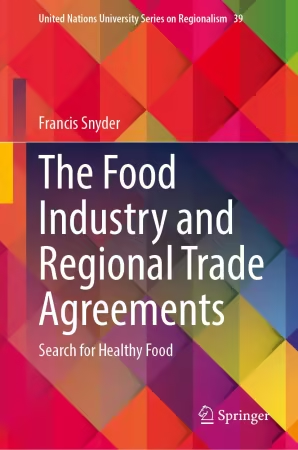
The Food Industry and Regional Trade Agreements
https://WebToolTip.com
English | July 14, 2026 | ISBN-10: 3032248868 | 244 pages| Epub PDF (True) | 10 MB
The book studies the regulation of the food and beverage industry (F&B) in and by all leading regional trade agreements (RTAs) in the world. It critically evaluates the institutions, rules, and dispute settlement processes used to regulate F&B in older RTAs, such as United States-Mexico-Canada USMCA, Southern Common Market Mercosur/Mercosul, European Union EU, and Europe-Asia Economic Union EAEU, and also focuses on rapidly evolving or more recently established RTAs, such as the African Continental Free Trade Area AfCFTA, Regional Comprehensive Economic Partnership RCEP, and Association of Southeast Asian Nations ASEAN. It discusses specific examples of major F&B companies to see if they comply or purport to comply with three indicators of healthy food: front-of-pack labelling; environmental, social and governance ESG compliance and the UN Sustainable Development Goals; and the avoidance of highly processed food HPF. It advances specific proposals to companies and to consumers to help achieve the goal of healthy food. The book marshals a sophisticated legal perspective, detailed economic knowledge of major F&B multinational companies worldwide, and constructive and cutting-edge proposals to such companies about providing consumers with up-to-date information to enable them to choose healthy food.