Sustainable AI Techniques for Real-Time Risk Monitoring
About Sustainable AI Techniques for Real-Time Risk Monitoring
Overview
Sustainable AI Techniques for Real-Time Risk Monitoring https://WebToolTip.com English | August 30, 2026 | ISBN-10: 3032286719 | 354 pages| Epub PDF (True) | 36 MB Sustainable AI Techniques for Real-Time Risk Monitoring offers a comprehensive examination of energy-efficient artificial intelligence approaches for hazard detection in smart environments. The book begins by identifying the limitations of traditional AI models —particularly their high computational and energy demands — and introduces
Frequently Asked Questions
How do I download Sustainable AI Techniques for Real-Time Risk Monitoring?
Click the magnet or torrent download button on this page to start downloading Sustainable AI Techniques for Real-Time Risk Monitoring. A BitTorrent client is required.
What is the file size of Sustainable AI Techniques for Real-Time Risk Monitoring?
The total size of Sustainable AI Techniques for Real-Time Risk Monitoring is 38.7 MB.
How many seeders are available for Sustainable AI Techniques for Real-Time Risk Monitoring?
Sustainable AI Techniques for Real-Time Risk Monitoring currently has 20190 seeders, which affects download speed.
What category is Sustainable AI Techniques for Real-Time Risk Monitoring in?
Sustainable AI Techniques for Real-Time Risk Monitoring is listed under Other on 1337x.
Sustainable AI Techniques for Real-Time Risk Monitoring
https://WebToolTip.com
English | August 30, 2026 | ISBN-10: 3032286719 | 354 pages| Epub PDF (True) | 36 MB
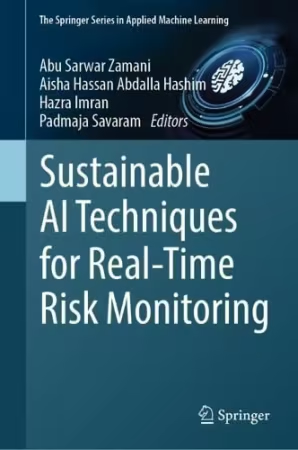
Sustainable AI Techniques for Real-Time Risk Monitoring offers a comprehensive examination of energy-efficient artificial intelligence approaches for hazard detection in smart environments. The book begins by identifying the limitations of traditional AI models —particularly their high computational and energy demands — and introduces the concept of Green AI as a sustainable alternative. It systematically presents key methodologies, including lightweight deep learning architectures, model optimization techniques, and the integration of edge and fog computing. In addition, it explores advanced paradigms such as federated learning and bio-inspired computing to enable scalable and resource-efficient real-time monitoring systems.
The book further elaborates on practical applications across diverse domains, including fire hazard detection, industrial safety, environmental monitoring, and smart healthcare systems. It also examines how secure and decentralized technologies—such as blockchain—enhance the reliability of IoT-based hazard detection frameworks. The concluding section outlines future research directions, emphasizing renewable-powered IoT infrastructures and the ethical, legal, and societal implications of Green AI.
Overall, this book serves as a valuable resource for academics, researchers, and practitioners striving to develop sustainable, reliable, and energy-conscious intelligent safety systems.