Racisms - The Hidden Logics of Prejudice
About Racisms - The Hidden Logics of Prejudice
Overview
Racisms: The Hidden Logics of Prejudice https://WebToolTip.com English | 2026 | ISBN-10: 3032229618 | 197 pages| Epub PDF (True) | 7 MB This book presents a critical and comparative history of how human populations have been socially constructed and categorized through racializing processes. Building on Renato Foschi’s Italian volume Storia dei razzismi (2022), this expanded English edition offers a unique synthesis of historical case studies and the underlying logics that have sustained racism
Frequently Asked Questions
How do I download Racisms - The Hidden Logics of Prejudice?
Click the magnet or torrent download button on this page to start downloading Racisms - The Hidden Logics of Prejudice. A BitTorrent client is required.
What is the file size of Racisms - The Hidden Logics of Prejudice?
The total size of Racisms - The Hidden Logics of Prejudice is 7.2 MB.
How many seeders are available for Racisms - The Hidden Logics of Prejudice?
Racisms - The Hidden Logics of Prejudice currently has 20187 seeders, which affects download speed.
What category is Racisms - The Hidden Logics of Prejudice in?
Racisms - The Hidden Logics of Prejudice is listed under Other on 1337x.
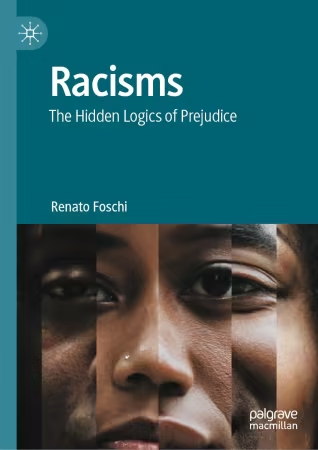
Racisms: The Hidden Logics of Prejudice
https://WebToolTip.com
English | 2026 | ISBN-10: 3032229618 | 197 pages| Epub PDF (True) | 7 MB
This book presents a critical and comparative history of how human populations have been socially constructed and categorized through racializing processes. Building on Renato Foschi’s Italian volume Storia dei razzismi (2022), this expanded English edition offers a unique synthesis of historical case studies and the underlying logics that have sustained racism across time and cultures.
Foschi distinguishes between spiritual and scientific racisms, tracing their development through religious, philosophical, and pseudo-scientific traditions. He examines how various groups—including Jewish communities, people of African descent, women, working-class individuals, and LGBTQ+ people—have been positioned as distinct “races” through shifting systems of exclusion. The book also explores lesser-known cases, such as the racialization of Southern Italians, to nstrate how these dynamics operate within national and regional contexts.