Bioresource Waste to Carbon Nanomaterial - Food, Agriculture and ...
About Bioresource Waste to Carbon Nanomaterial - Food, Agriculture and ...
Overview
Bioresource Waste to Carbon Nanomaterial: Food, Agriculture and Circular Bioeconomy Paradigm https://WebToolTip.com English | August 14, 2026 | ISBN-10: 9819224047 | 469 pages| Epub PDF (True) | 44 MB This book explores strategies for transforming bio-resource waste into valuable carbon nanomaterials, contributing to the advancement of a circular bioeconomy. By bridging the domains of nanotechnology, waste valorization and sustainability, this volume highlights biosynthetic approaches for fabric
Frequently Asked Questions
How do I download Bioresource Waste to Carbon Nanomaterial - Food, Agriculture and ...?
Click the magnet or torrent download button on this page to start downloading Bioresource Waste to Carbon Nanomaterial - Food, Agriculture and .... A BitTorrent client is required.
What is the file size of Bioresource Waste to Carbon Nanomaterial - Food, Agriculture and ...?
The total size of Bioresource Waste to Carbon Nanomaterial - Food, Agriculture and ... is 43.6 MB.
How many seeders are available for Bioresource Waste to Carbon Nanomaterial - Food, Agriculture and ...?
Bioresource Waste to Carbon Nanomaterial - Food, Agriculture and ... currently has 18124 seeders, which affects download speed.
What category is Bioresource Waste to Carbon Nanomaterial - Food, Agriculture and ... in?
Bioresource Waste to Carbon Nanomaterial - Food, Agriculture and ... is listed under Other on 1337x.
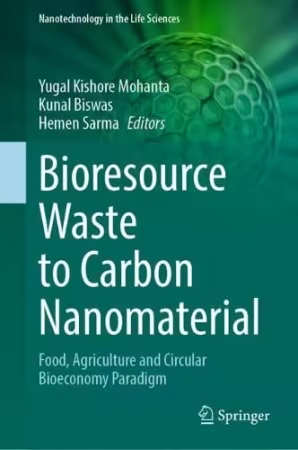
Bioresource Waste to Carbon Nanomaterial: Food, Agriculture and Circular Bioeconomy Paradigm
https://WebToolTip.com
English | August 14, 2026 | ISBN-10: 9819224047 | 469 pages| Epub PDF (True) | 44 MB
This book explores strategies for transforming bio-resource waste into valuable carbon nanomaterials, contributing to the advancement of a circular bioeconomy. By bridging the domains of nanotechnology, waste valorization and sustainability, this volume highlights biosynthetic approaches for fabricating carbon-based materials from agricultural, food and industrial waste streams. Readers will gain insights into carbon sequestration, biochar production, and the role of artificial intelligence and machine learning in optimizing waste-to-nanomaterial conversion. The book further explores its applications in agriculture, including nano-enabled pesticide delivery, crop spoilage detection and nutrient management, alongside biomedical innovations such as antioxidant and anticancer potential of waste-derived nanostructures. Special emphasis is placed on sector-specific waste sources, such as rice husk, food waste, polythene and dairy effluents, and their transformation into high-value nanomaterials. Toxicological studies, in vitro/in vivo evaluations, and ethical and safety considerations associated with nanomaterial applications are also addressed.