Institutional Entrepreneurship in African Fintech
About Institutional Entrepreneurship in African Fintech
Overview
Institutional Entrepreneurship in African Fintech https://WebToolTip.com English | June 30, 2026 | ISBN-10: 3032125030 | 461 pages| Epub PDF (True) | 13 MB Institutional Entrepreneurship in African Fintech explores how technology ventures build legitimacy, navigate institutional voids, and sustain growth in Africa’s fast-evolving financial landscape. Blending scholarly insight with practical application, it introduces the Change Readiness Framework, which highlights three essential entrepreneuri
Frequently Asked Questions
How do I download Institutional Entrepreneurship in African Fintech?
Click the magnet or torrent download button on this page to start downloading Institutional Entrepreneurship in African Fintech. A BitTorrent client is required.
What is the file size of Institutional Entrepreneurship in African Fintech?
The total size of Institutional Entrepreneurship in African Fintech is 12.3 MB.
How many seeders are available for Institutional Entrepreneurship in African Fintech?
Institutional Entrepreneurship in African Fintech currently has 20017 seeders, which affects download speed.
What category is Institutional Entrepreneurship in African Fintech in?
Institutional Entrepreneurship in African Fintech is listed under Other on 1337x.
Institutional Entrepreneurship in African Fintech
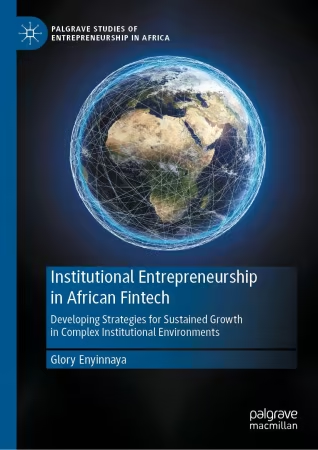
https://WebToolTip.com
English | June 30, 2026 | ISBN-10: 3032125030 | 461 pages| Epub PDF (True) | 13 MB
Institutional Entrepreneurship in African Fintech explores how technology ventures build legitimacy, navigate institutional voids, and sustain growth in Africa’s fast-evolving financial landscape.
Blending scholarly insight with practical application, it introduces the Change Readiness Framework, which highlights three essential entrepreneurial capabilities—Customer Orientation, Collectivism, and Commitment to Impact—and seven corresponding pillars of institutional entrepreneurship. Together, these elements offer a grounded model for understanding how African innovators transform fragmented systems into functional markets.
Drawing on original fieldwork and case studies across the continent, the book bridges academic rigor and practical relevance, offering scholars, entrepreneurs, investors and policymakers a blueprint for studying, building and funding trustworthy, scalable, and socially grounded innovation ecosystems.