From Quarry Waste to Usable Concrete - Principles and Practice
About From Quarry Waste to Usable Concrete - Principles and Practice
Overview
From Quarry Waste to Usable Concrete: Principles and Practice https://WebToolTip.com English | 2026 | ISBN: 1041063520 | 388 pages | True PDF,EPUB | 84.46 MB Rather than simply disposing of quarry wastes, these can be used effectively in cementitious composites. This requires a good understanding of their essential properties, microscale material characterisation methods, and reactivity and function as concrete fillers, as well as the challenge of safety in processing, cleaning, and neutralizing
Frequently Asked Questions
How do I download From Quarry Waste to Usable Concrete - Principles and Practice?
Click the magnet or torrent download button on this page to start downloading From Quarry Waste to Usable Concrete - Principles and Practice. A BitTorrent client is required.
What is the file size of From Quarry Waste to Usable Concrete - Principles and Practice?
The total size of From Quarry Waste to Usable Concrete - Principles and Practice is 84.5 MB.
How many seeders are available for From Quarry Waste to Usable Concrete - Principles and Practice?
From Quarry Waste to Usable Concrete - Principles and Practice currently has 28689 seeders, which affects download speed.
What category is From Quarry Waste to Usable Concrete - Principles and Practice in?
From Quarry Waste to Usable Concrete - Principles and Practice is listed under Other on 1337x.
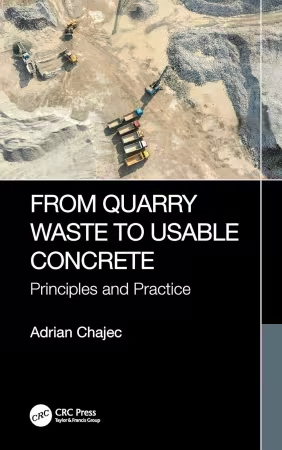
From Quarry Waste to Usable Concrete: Principles and Practice
https://WebToolTip.com
English | 2026 | ISBN: 1041063520 | 388 pages | True PDF,EPUB | 84.46 MB
Rather than simply disposing of quarry wastes, these can be used effectively in cementitious composites. This requires a good understanding of their essential properties, microscale material characterisation methods, and reactivity and function as concrete fillers, as well as the challenge of safety in processing, cleaning, and neutralizing hazardous compounds. Seven detailed case studies give very practical examples. The book extends into life cycle assessment, the possibilities of AI-based prediction of the durability of relevant concrete, and economic assessment. This suits academic researchers as well as industry professionals considering sustainable materials and waste management.