Problem Solving in Philosophy - How to Do Philosophy in the Age o...
About Problem Solving in Philosophy - How to Do Philosophy in the Age o...
Overview
Problem Solving in Philosophy: How to Do Philosophy in the Age of Ultra-Intelligent AI https://WebToolTip.com English | June 23, 2026 | ISBN-10: 3032177553 | 274 pages| Epub PDF (True) | 10 MB This open access book provides a method for philosophical problem solving, offering philosophers the tools to stay ahead of machine intelligence. Louis Vervoort argues that, with ultra-intelligent AI knocking at the door, philosophy can no longer rely solely on its ancient methodological toolkit. The propo
Frequently Asked Questions
How do I download Problem Solving in Philosophy - How to Do Philosophy in the Age o...?
Click the magnet or torrent download button on this page to start downloading Problem Solving in Philosophy - How to Do Philosophy in the Age o.... A BitTorrent client is required.
What is the file size of Problem Solving in Philosophy - How to Do Philosophy in the Age o...?
The total size of Problem Solving in Philosophy - How to Do Philosophy in the Age o... is 10.2 MB.
How many seeders are available for Problem Solving in Philosophy - How to Do Philosophy in the Age o...?
Problem Solving in Philosophy - How to Do Philosophy in the Age o... currently has 26716 seeders, which affects download speed.
What category is Problem Solving in Philosophy - How to Do Philosophy in the Age o... in?
Problem Solving in Philosophy - How to Do Philosophy in the Age o... is listed under Other on 1337x.
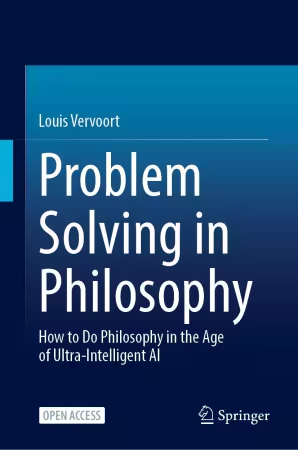
Problem Solving in Philosophy: How to Do Philosophy in the Age of Ultra-Intelligent AI
https://WebToolTip.com
English | June 23, 2026 | ISBN-10: 3032177553 | 274 pages| Epub PDF (True) | 10 MB
This open access book provides a method for philosophical problem solving, offering philosophers the tools to stay ahead of machine intelligence. Louis Vervoort argues that, with ultra-intelligent AI knocking at the door, philosophy can no longer rely solely on its ancient methodological toolkit. The proposed method is essentially the same as used in natural science, theoretical physics in particular, and aims at solving problems through theory-synthesis. The author shows by first case studies that current AI can already assist us in this task – a trend that will surely strengthen in the near future. After explaining the method in detail, the book proceeds by proposing unified solutions to classic problems of (analytic) philosophy, such as Gettier’s problem, the problem of induction, of causation, of the interpretation of probability, of free will. The author argues that these solutions maximise a quantitative measure of solidity, and that philosophy can now reach standards of certainty that are comparable to those of natural science. The book is written for professional philosophers, but avoids jargon, so it should also be accessible to laypeople and scientists.